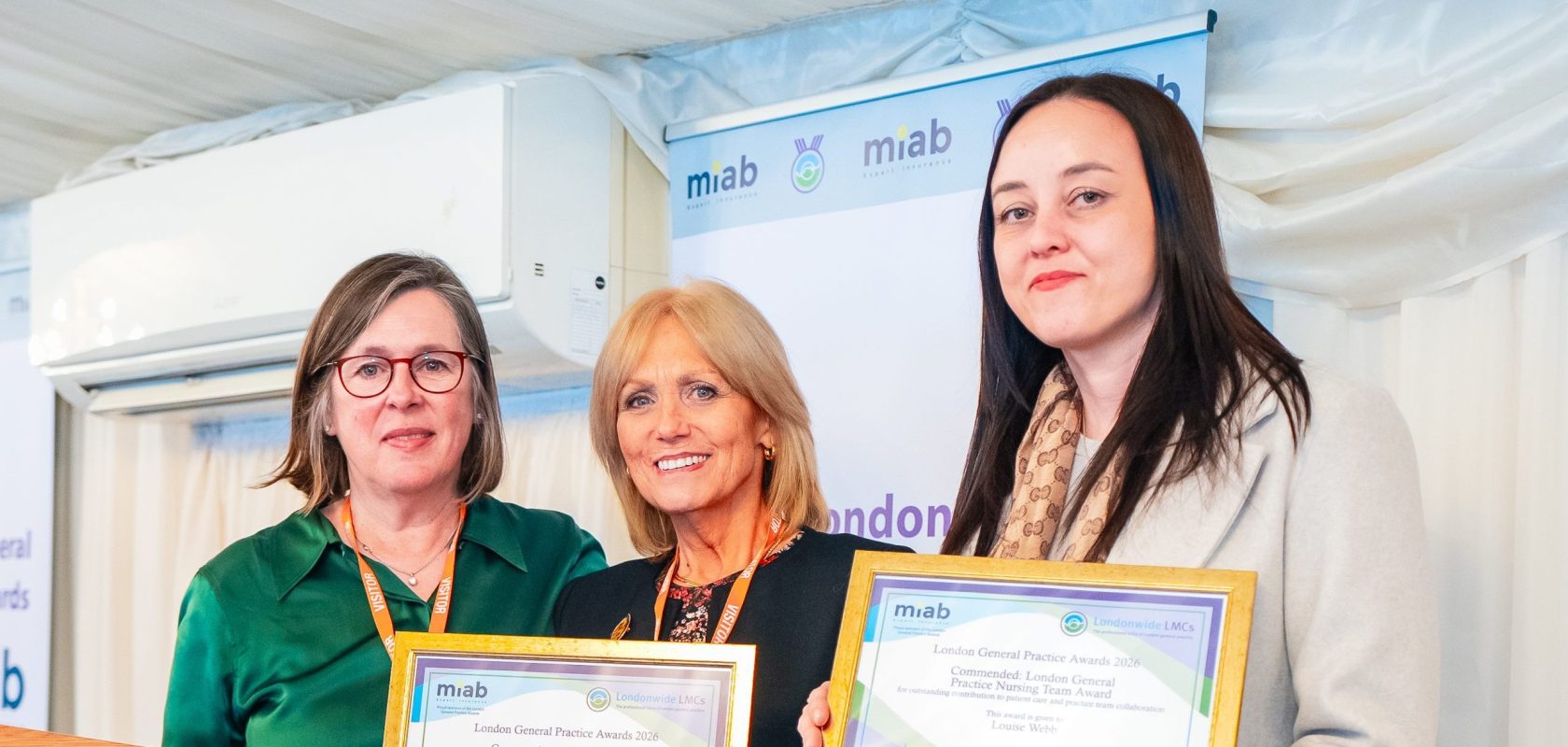
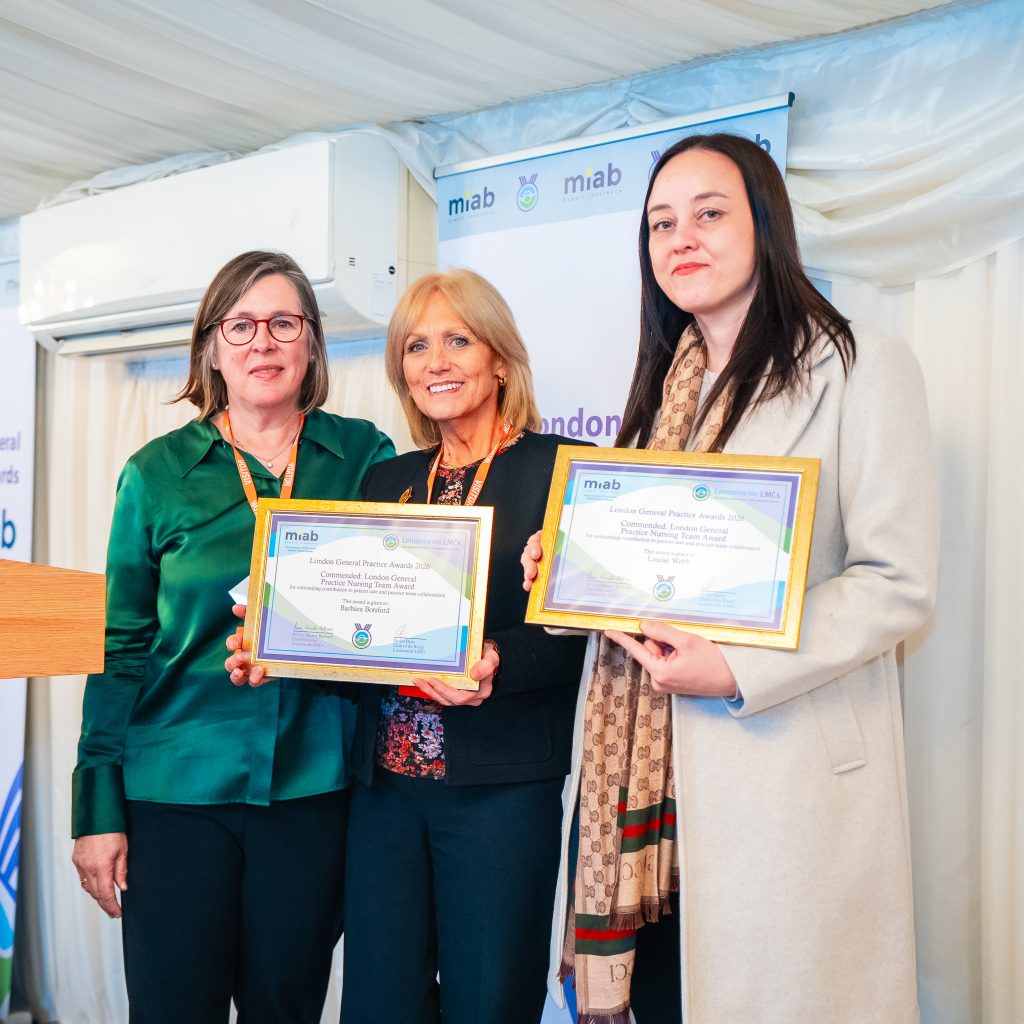
Gill Rogers and Barbara Botsford & Louise Webb (Rutland House Surgery)
Following the awards, Barbara Botsford took some time to explain why they were recognised.
“When I was first told I had received an award, I was genuinely shocked. I am proud to be a nurse and part of a family that has always served. the community. Our practice is not just a surgery—it is a family, and our patients are part of it. For me, the award is not about recognition—it is about amplifying the message that housebound patients must not be forgotten. Community care matters, and we must invest in it,” Barbara said.
“I have been a nurse for more than 50 years; I carry that legacy proudly. I come from a family devoted to service — my mother was a nurse, my grandmother worked in a GP practice, my father served in rescue, and my son is a firefighter.”
A small practice with a big population
In May 2021, Rutland House Surgery merged with Queens Avenue Practice. The GP surgery has two senior partners and around six to seven salaried GPs and cares for roughly 11,000 patients across both sites.
Before the merge, just before the COVID-19 pandemic, the surgery served a large Greek Cypriot population.
“Today, our community is incredibly diverse: Greek and Turkish Cypriot families, Eastern European communities, Afro Caribbean and African patients, Indian and Nepalese families, and refugees from Syria and Iraq. There are around 180 languages represented on our language board.”
She continued, “I am the Senior Practice Nurse — which, in truth, means I’m a bit of everything: the clinical lead, equipment troubleshooter, fire safety trainer, and yes, buyer of the coffee and allergy tablets,” Barbara laughed.
“I work closely with our healthcare assistant, Louise Webb, who rotates between both sites so she can offer blood tests across the full patient base. We also have a part‑time nurse who covers cervical screening, an excellent practice manager, and a small but hardworking admin team.”
“We are a practice rooted in community, compassion, and continuity. And none of this would be possible without Louise. The way we work together is seamless, instinctive — almost magic. She is half of everything we have achieved.”
Taking general practice to those who cannot reach it
During the NCL Value Awards, Barbara spoke about a group often forgotten – those who are housebound.
“There are around three and a half million housebound people in the UK — among the loneliest and most vulnerable — who often go unseen because they simply cannot get to their GP practice. So, we reversed the model taking the surgery to them.”
“When I visit, I do not just take bloods or check a wound. I look at the entire picture: Is the patient warm enough? Is there food in the house? Are their medications being taken correctly — or piling up unused? Is the home safe?”
Barbara continued, “I have walked into houses stacked with thousands of pounds’ worth of unused medical supplies, prescribed automatically without anyone reviewing need. I have seen people drowning in deliveries they never ordered, unable to read labels, unintentionally hoarding medications out of fear or confusion. I have stopped waste, safeguarded patients, and connected families and services who had no idea what was happening behind closed doors.”
“Holistic care is not new. It is how I was trained 50 years ago. And it is how Louise and I still practice — thoroughly, attentively, and compassionately.”
Building the community
Even with space constraints, the team manages to unite and engage with the community.
“Each Christmas, we host a party for patients over eighty years of age. The entire team comes — doctors, receptionists, admin, everyone. My husband who is a musician, plays for them. They request everything from Vera Lynn to Jimi Hendrix,” she smiled.
“We have held baby‑photo guessing competitions, quizzes, and musical afternoons. Last year, we invited my son, a London firefighter, to talk about home fire safety. He demonstrated how quickly firefighters must suit up, and patients cheered him on as he raced the timer. We brought hoses and equipment so people could see what firefighters use every day.
The most moving moment came when a gentleman, recently widowed and known for being quite gruff, broke down in tears while telling my son that his uncle had been a firefighter in the First World War. My son hugged him, and the whole room was in pieces. These are the small moments that bind a community.”
Looking ahead
“For this year’s community event, I hope to start a dementia choir. Music can be profoundly therapeutic, and we saw its power when we hosted a dementia day at my son’s fire station — watching patients with severe dementia waltz with firefighters is something I will never forget. I have already spoken with a choir master, and with my husband’s musical help, I think we can make it happen,” Barbara said with a smile.